
Apartment workshop soundproofing: a practical guide for DIYers

Combining quieter tools, simple dampening materials, and a few smart work-hour choices can keep apartment DIY projects from turning into noise complaints. Here's how to build a setup your downstairs neighbors won't hear.
Apartment workshop soundproofing: a practical guide for DIYers
Quieter tools, dampening materials, and smart timing — a research-backed plan for DIYers in multi-unit housing.
What makes apartment workshop noise different
- Apartment noise problems split into airborne sound (motors, saws, sanders) and impact sound (vibration traveling through the floor and frame), and most complaints come from impact transmission rather than volume.
- Neighbor relations and lease rules usually determine what tools and hours are workable — well before any acoustic treatment matters.
- A layered approach — quieter source, isolated surface, absorptive room, contained door — works better than any single expensive fix. ::
A home workshop in a single-family house fights volume. A home workshop in an apartment fights the building. The two are not the same problem, and that's the first thing that confuses people who try to apply "garage shop" advice to a spare bedroom or corner of a living room. Garages sit on slabs, often detached, with no one on the other side of the drywall. Apartments share framing, subfloor, and sometimes concrete deck with units you don't control, and those structures are optimized for cost and square footage — not for stopping a random router from waking up the person below you.
Most apartment partitions are wood stud with a single layer of gypsum on each side, sometimes with fiberglass batt insulation, often without. That assembly is rated to muffle conversation but not a circular saw. Floor/ceiling assemblies are usually worse: a thin subfloor glued or screwed to joists, with a single layer of drywall directly fastened to the underside of those joists. There is no decoupling, no resilient channel, no mass-loaded vinyl. When you drop a block of wood onto your workbench, the energy doesn't just make a sound — it travels down the bench legs, into the floor, along the joists, and radiates back out as sound in the unit below. This is why downstairs neighbors often complain about footsteps or dropped tools even when they can barely hear the actual tool.
This is the difference between airborne and impact sound, and the terms matter because the solutions don't overlap. Airborne sound is your drill, your random orbital sander, your shop vac — pressure waves traveling through the air, hitting a wall, and being transmitted. You fight it with mass, density, and sealing air gaps. Impact sound is vibration: a mallet strike, a miter saw blade coming to rest, a heavy tool set down on a bench. You fight it with isolation, decoupling, and soft materials at the contact point. Many apartment workshops fail noise control because the owner buys acoustic foam (which only helps airborne sound inside the room, not at the wall) and ignores the bench sitting directly on a hardwood floor with rubber feet that are doing essentially nothing at low frequencies.
The second reality is that neighbors are the actual constraint, not acoustics. A decibel meter tells you what the wall transmits. A neighbor decides whether what gets through is acceptable. Most leases include quiet hours — typically 10 p.m. to 8 a.m. on weekdays, sometimes 24 hours on Sundays — and many add clauses about "excessive noise" without defining it. HOAs and property managers interpret those clauses broadly. A perfectly legal 75 dB shop vac run at 2 p.m. on a Saturday can still generate a complaint if the downstairs unit has a sleeping baby, a remote worker on a call, or simply a person who doesn't appreciate power tools. Once a complaint is logged, the next one often becomes a lease violation. So the working framework is: assume any tool you run will be judged by the most sensitive person in the building, on their worst day, with the windows closed.
That framing is what makes a layered approach the only realistic path. No single product eliminates the problem, and overspending on one layer (a $600 acoustic door, say) while ignoring others (a bench hard-mounted to the floor) gives you diminishing returns. A useful mental model is four layers, addressed in roughly this order of cost-effectiveness:
First, the source. Brushless motors are meaningfully quieter than brushed. Variable-speed tools let you ramp up instead of starting at full throttle. Hand tools — a hand plane, a Japanese pull saw, a brace and bit — produce almost no transmitted noise and a surprising amount of real work. This layer is free or cheap, and it's where most reduction actually happens.
Second, isolation. The workbench should not touch the floor directly. Sorbothane or neoprene pads under each leg drop impact transmission dramatically — published ratings for common isolators show 80–95% reduction at frequencies above 50 Hz. Anti-vibration mats under benchtop tools (compressor, grinder, small lathe) do the same thing at the tool level. A heavy bench sitting on carpet without pads is the worst case; a medium bench on proper isolators is dramatically better than a heavy bench on bare floor.
Third, the room. Acoustic panels and 4–6 inch mineral wool absorbers reduce the airborne sound bouncing around inside your shop, which both lowers the level hitting the shared walls and makes the space more pleasant to work in. They do not, despite marketing, "block" sound from leaving — they reduce reflection. Heavy curtains over the shared wall add a small amount of mass and dampen first reflections. Weatherstripping the door and sealing the gap at the bottom is the cheapest, most overlooked fix in the entire stack.
Fourth, scheduling and communication. Tell the immediate neighbors what you're doing, when, and how long. Run the loudest work during mid-morning or early afternoon on weekdays, not Saturday morning. Keep a short log. This is the layer most people skip, and it's the one that determines whether you get a second warning or a friendly knock on the door.
The mistake to avoid is treating apartment workshop noise as a product problem. It's a building problem, a relationship problem, and a physics problem — in that order of leverage. The right tool list follows from accepting that, not from chasing the lowest dB rating on a spec sheet.## What makes apartment workshop noise different
- Apartment noise problems split into airborne sound (motors, saws, sanders) and impact sound (vibration traveling through the floor and frame), and most complaints come from impact transmission rather than volume.
- Neighbor relations and lease rules usually determine what tools and hours are workable — well before any acoustic treatment matters.
- A layered approach — quieter source, isolated surface, absorptive room, contained door — works better than any single expensive fix. ::
A home workshop in a single-family house fights volume. A home workshop in an apartment fights the building. The two are not the same problem, and that's the first thing that confuses people who try to apply "garage shop" advice to a spare bedroom or corner of a living room. Garages sit on slabs, often detached, with no one on the other side of the drywall. Apartments share framing, subfloor, and sometimes concrete deck with units you don't control, and those structures are optimized for cost and square footage — not for stopping a random router from waking up the person below you.
Most apartment partitions are wood stud with a single layer of gypsum on each side, sometimes with fiberglass batt insulation, often without. That assembly is rated to muffle conversation but not a circular saw. Floor/ceiling assemblies are usually worse: a thin subfloor glued or screwed to joists, with a single layer of drywall directly fastened to the underside of those joists. There is no decoupling, no resilient channel, no mass-loaded vinyl. When you drop a block of wood onto your workbench, the energy doesn't just make a sound — it travels down the bench legs, into the floor, along the joists, and radiates back out as sound in the unit below. This is why downstairs neighbors often complain about footsteps or dropped tools even when they can barely hear the actual tool.
This is the difference between airborne and impact sound, and the terms matter because the solutions don't overlap. Airborne sound is your drill, your random orbital sander, your shop vac — pressure waves traveling through the air, hitting a wall, and being transmitted. You fight it with mass, density, and sealing air gaps. Impact sound is vibration: a mallet strike, a miter saw blade coming to rest, a heavy tool set down on a bench. You fight it with isolation, decoupling, and soft materials at the contact point. Many apartment workshops fail noise control because the owner buys acoustic foam (which only helps airborne sound inside the room, not at the wall) and ignores the bench sitting directly on a hardwood floor with rubber feet that are doing essentially nothing at low frequencies.
The second reality is that neighbors are the actual constraint, not acoustics. A decibel meter tells you what the wall transmits. A neighbor decides whether what gets through is acceptable. Most leases include quiet hours — typically 10 p.m. to 8 a.m. on weekdays, sometimes 24 hours on Sundays — and many add clauses about "excessive noise" without defining it. HOAs and property managers interpret those clauses broadly. A perfectly legal 75 dB shop vac run at 2 p.m. on a Saturday can still generate a complaint if the downstairs unit has a sleeping baby, a remote worker on a call, or simply a person who doesn't appreciate power tools. Once a complaint is logged, the next one often becomes a lease violation. So the working framework is: assume any tool you run will be judged by the most sensitive person in the building, on their worst day, with the windows closed.
That framing is what makes a layered approach the only realistic path. No single product eliminates the problem, and overspending on one layer (a $600 acoustic door, say) while ignoring others (a bench hard-mounted to the floor) gives you diminishing returns. A useful mental model is four layers, addressed in roughly this order of cost-effectiveness:
First, the source. Brushless motors are meaningfully quieter than brushed. Variable-speed tools let you ramp up instead of starting at full throttle. Hand tools — a hand plane, a Japanese pull saw, a brace and bit — produce almost no transmitted noise and a surprising amount of real work. This layer is free or cheap, and it's where most reduction actually happens.
Second, isolation. The workbench should not touch the floor directly. Sorbothane or neoprene pads under each leg drop impact transmission dramatically — published ratings for common isolators show 80–95% reduction at frequencies above 50 Hz. Anti-vibration mats under benchtop tools (compressor, grinder, small lathe) do the same thing at the tool level. A heavy bench sitting on carpet without pads is the worst case; a medium bench on proper isolators is dramatically better than a heavy bench on bare floor.
Third, the room. Acoustic panels and 4–6 inch mineral wool absorbers reduce the airborne sound bouncing around inside your shop, which both lowers the level hitting the shared walls and makes the space more pleasant to work in. They do not, despite marketing, "block" sound from leaving — they reduce reflection. Heavy curtains over the shared wall add a small amount of mass and dampen first reflections. Weatherstripping the door and sealing the gap at the bottom is the cheapest, most overlooked fix in the entire stack.
Fourth, scheduling and communication. Tell the immediate neighbors what you're doing, when, and how long. Run the loudest work during mid-morning or early afternoon on weekdays, not Saturday morning. Keep a short log. This is the layer most people skip, and it's the one that determines whether you get a second warning or a friendly knock on the door.
The mistake to avoid is treating apartment workshop noise as a product problem. It's a building problem, a relationship problem, and a physics problem — in that order of leverage. The right tool list follows from accepting that, not from chasing the lowest dB rating on a spec sheet.
Cheap acoustic wins you can install this weekend
If you're renting, working with thin apartment walls, or just tired of every voice and footstep carrying through your space, you don't need a contractor or a remodel. Most of the meaningful acoustic improvements people chase with expensive panels and bass traps are within a weekend's reach — and under a hundred dollars — once you know where sound is actually leaking.
A few principles worth understanding before you buy anything: airborne sound (voices, TVs, music) loses energy whenever it has to pass through mass, and it leaks through any unsealed gap. Impact sound (footsteps, dropped items) travels through the structure itself, which is much harder to address without construction. The fixes below are weighted toward airborne noise because that's what renters can actually do something about, and every one of them is either fully reversible or close to it.
Dense area rugs with a real pad
The cheapest, highest-impact change for most renters is laying a serious rug. Not the thin, low-pile accent rug that looks fine in a catalog photo — a genuinely heavy woven or hand-knotted rug, ideally 8×10 feet or larger, paired with a dense felt or rubber pad underneath. The pad is where the acoustic work happens: a thin rug on a thin pad does almost nothing, while a thick wool rug on a ⅜-inch felt pad can noticeably reduce footstep noise for downstairs neighbors and cut flutter echo inside the room.
A useful rough target is a rug in the 8–12 lb/sq yd range if the spec is published, and don't skip the underlay. A 4×6 rug floating in the middle of a 12×12 room is mostly decorative; a wall-to-wall rug with quality padding is a real acoustic upgrade. Both are fully reversible — you roll it up and take it with you.
Door sweeps and weatherstripping
A standard interior door sits about 1.5 inches off the floor. That gap is an open invitation for sound to travel underneath, and a $10–15 self-adhesive rubber door sweep closes most of it. Add peel-and-stick weatherstripping around the door frame and you've got a surprisingly effective seal for the price. Combined, these two materials usually run well under $25 and can be installed with scissors and a tape measure in under an hour.
This is one of those upgrades where renters often report more difference than they expected, especially for hallway noise, TV sound bleeding out of a living room, or conversations carrying under a closed bedroom door. The adhesive residue comes off with warm soapy water and a little household adhesive remover, so it's lease-safe in nearly every case.
Acoustic foam tiles — what they actually do
Acoustic foam is the most misunderstood product in this category. It does not meaningfully block sound from neighbors — it treats reflections inside your own room. If your problem is echo when you talk, a hard-boomy podcast recording, or a room that sounds "live," foam can help. If your problem is hearing your neighbor's TV through the wall, foam on your side will not do much.
For the use case foam does handle, 1- to 2-inch wedge or pyramid tiles installed at the first reflection points (the wall and ceiling spots where sound from your speakers or voice bounces directly back to your listening position) make a real difference. The catch for renters is the adhesive. Many tiles ship with foam-safe spray adhesive that can peel paint off on removal. Look for tiles sold with removable adhesive strips, hook-and-loop, or mounting putty — these hold foam reliably and come off clean.
Bookshelf placement as mass
A tall, fully loaded bookshelf placed against a shared wall is essentially a poor man's second layer of drywall. Mass is what blocks sound, and a 6-foot-tall solid-wood bookshelf packed with books adds significant mass to that wall — often more than a 1-inch acoustic panel would, and arguably more useful day-to-day. Staggering the books (some upright, some stacked, some laid flat) also creates diffusion, which softens reflections better than a flat surface.
This is a great "move the furniture you already have" fix before buying anything new. If you do buy, look for solid construction — hollow particleboard and thin MDF shelves flex and resonate, which can actually make things slightly worse. The shelf is fully reversible, of course, and doubles as storage.
Sealing electrical outlet and switch gaps
On interior walls shared with neighbors, the boxes behind your outlets and light switches are holes cut into your drywall, and they leak sound directly into the wall cavity. Pre-cut fire-rated foam outlet gaskets cost a few dollars and install in about 30 seconds per outlet: switch off the breaker, unscrew the cover plate, press the gasket over the outlet, replace the plate. The gaskets are UL-rated for fire safety, which matters because electrical boxes need to dissipate heat and the wrong foam can be a fire risk.
For a studio apartment, this is one of the most cost-effective sound upgrades available — easily under $10 for a full place, fully reversible, and renters do it themselves without touching the structure. It's a quiet fix in every sense.
- Dense rug + quality pad — Highest DIY impact for impact and reflection noise; fully reversible
- Door sweep + weatherstripping — Cheapest sound-blocking win; reversible with light cleanup
- Foam tiles on removable strips — Treats room reflections only; check mounting type for paint safety
- Loaded bookshelf against shared wall — Adds real mass and diffusion; fully reversible furniture move
- Outlet and switch gaskets — Five-minute install, under $10, fully reversible, fire-safe ::## Cheap acoustic wins you can install this weekend
If you're renting, working with thin apartment walls, or just tired of every voice and footstep carrying through your space, you don't need a contractor or a remodel. Most of the meaningful acoustic improvements people chase with expensive panels and bass traps are within a weekend's reach — and under a hundred dollars — once you know where sound is actually leaking.
A few principles worth understanding before you buy anything: airborne sound (voices, TVs, music) loses energy whenever it has to pass through mass, and it leaks through any unsealed gap. Impact sound (footsteps, dropped items) travels through the structure itself, which is much harder to address without construction. The fixes below are weighted toward airborne noise because that's what renters can actually do something about, and every one of them is either fully reversible or close to it.
Dense area rugs with a real pad
The cheapest, highest-impact change for most renters is laying a serious rug. Not the thin, low-pile accent rug that looks fine in a catalog photo — a genuinely heavy woven or hand-knotted rug, ideally 8×10 feet or larger, paired with a dense felt or rubber pad underneath. The pad is where the acoustic work happens: a thin rug on a thin pad does almost nothing, while a thick wool rug on a ⅜-inch felt pad can noticeably reduce footstep noise for downstairs neighbors and cut flutter echo inside the room.
A useful rough target is a rug in the 8–12 lb/sq yd range if the spec is published, and don't skip the underlay. A 4×6 rug floating in the middle of a 12×12 room is mostly decorative; a wall-to-wall rug with quality padding is a real acoustic upgrade. Both are fully reversible — you roll it up and take it with you.
Door sweeps and weatherstripping
A standard interior door sits about 1.5 inches off the floor. That gap is an open invitation for sound to travel underneath, and a $10–15 self-adhesive rubber door sweep closes most of it. Add peel-and-stick weatherstripping around the door frame and you've got a surprisingly effective seal for the price. Combined, these two materials usually run well under $25 and can be installed with scissors and a tape measure in under an hour.
This is one of those upgrades where renters often report more difference than they expected, especially for hallway noise, TV sound bleeding out of a living room, or conversations carrying under a closed bedroom door. The adhesive residue comes off with warm soapy water and a little household adhesive remover, so it's lease-safe in nearly every case.
Acoustic foam tiles — what they actually do
Acoustic foam is the most misunderstood product in this category. It does not meaningfully block sound from neighbors — it treats reflections inside your own room. If your problem is echo when you talk, a hard-boomy podcast recording, or a room that sounds "live," foam can help. If your problem is hearing your neighbor's TV through the wall, foam on your side will not do much.
For the use case foam does handle, 1- to 2-inch wedge or pyramid tiles installed at the first reflection points (the wall and ceiling spots where sound from your speakers or voice bounces directly back to your listening position) make a real difference. The catch for renters is the adhesive. Many tiles ship with foam-safe spray adhesive that can peel paint off on removal. Look for tiles sold with removable adhesive strips, hook-and-loop, or mounting putty — these hold foam reliably and come off clean.
Bookshelf placement as mass
A tall, fully loaded bookshelf placed against a shared wall is essentially a poor man's second layer of drywall. Mass is what blocks sound, and a 6-foot-tall solid-wood bookshelf packed with books adds significant mass to that wall — often more than a 1-inch acoustic panel would, and arguably more useful day-to-day. Staggering the books (some upright, some stacked, some laid flat) also creates diffusion, which softens reflections better than a flat surface.
This is a great "move the furniture you already have" fix before buying anything new. If you do buy, look for solid construction — hollow particleboard and thin MDF shelves flex and resonate, which can actually make things slightly worse. The shelf is fully reversible, of course, and doubles as storage.
Sealing electrical outlet and switch gaps
On interior walls shared with neighbors, the boxes behind your outlets and light switches are holes cut into your drywall, and they leak sound directly into the wall cavity. Pre-cut fire-rated foam outlet gaskets cost a few dollars and install in about 30 seconds per outlet: switch off the breaker, unscrew the cover plate, press the gasket over the outlet, replace the plate. The gaskets are UL-rated for fire safety, which matters because electrical boxes need to dissipate heat and the wrong foam can be a fire risk.
For a studio apartment, this is one of the most cost-effective sound upgrades available — easily under $10 for a full place, fully reversible, and renters do it themselves without touching the structure. It's a quiet fix in every sense.
- Dense rug + quality pad — Highest DIY impact for impact and reflection noise; fully reversible
- Door sweep + weatherstripping — Cheapest sound-blocking win; reversible with light cleanup
- Foam tiles on removable strips — Treats room reflections only; check mounting type for paint safety
- Loaded bookshelf against shared wall — Adds real mass and diffusion; fully reversible furniture move
- Outlet and switch gaskets — Five-minute install, under $10, fully reversible, fire-safe ::
Upgrading the workbench surface and the wall behind it
The two surfaces that influence workshop noise and vibration the most are the one you're working on and the one directly behind you. A bench top that rings, transmits impact, and amplifies compressor cycling can undermine an otherwise well-treated room, and a bare drywall or cinderblock wall behind the bench bounces mid- and high-frequency energy straight back at your ears. Tackling both surfaces together is the highest-leverage move you can make before buying speakers, diffusers, or absorption panels.
Bench-top options: layered mass and decoupling
The cheapest and most effective way to deaden a workbench is to add mass in layers and decouple it from what it's sitting on. A common builder approach is to glue and screw a 12–19 mm MDF skin over a plywood substrate. MDF is dense and has poor resonance compared with OSB or hollow-core doors, so it soaks up the high-frequency "ping" you get from tapping a metal ruler on a bare worktop. For most home shops, a 19 mm MDF top sits well within a $40–$80 budget for a 1200 × 600 mm surface, and the result is a noticeably quieter, less "alive" surface for electronics work, soldering, and small-parts assembly.
A rubber mat underlayment works on a different principle. Instead of adding mass, it adds damping — a 6–12 mm closed-cell or reclaimed-rubber sheet laid between the bench frame and the top absorbs the mechanical energy that would otherwise travel into the legs and floor. It also kills the slip between top and frame, which matters when you're pushing on a stuck filter or driving screws. A 1.5 m² roll typically costs $25–$60 and is genuinely renter-friendly: you can lay it in place, set the top on it, and remove everything with no fasteners, no adhesive, and no damage.
Anti-vibration pads (sorbothane, neoprene, or dense rubber feet) are the most surgical option. They're sized for a single piece of equipment — a rotary tool stand, a small compressor, a 3D printer or laser engraver — and they decouple that one source from the bench rather than treating the whole surface. Expect to pay $10–$30 for a set of four, and expect real-world gains only on the items you put them under; the rest of the bench will still ring unless you've addressed the top itself.
- Layered MDF-over-plywood tops add mass and cost less than commercial workbenches
- Rubber underlayment installs in minutes and leaves zero marks on a rented floor
- Sorbothane or neoprene pads target individual offenders like compressors and 3D printers without redesigning the whole bench
- Without decoupling from the frame, even a heavy top will still transmit vibration through the legs into the floor below ::
Wall-behind-the-bench options: absorption, mass, or both
Whatever you do to the bench, a hard bare wall 50–100 cm behind you is going to throw mid- and high-frequency energy right back at your ears. There are three practical ways to deal with it, and they do different things.
Mass-loaded vinyl (MLV) is a dense, limp 1–2 lb/ft² sheet that hangs or is screwed to the wall like a second skin. Its job is blocking — it raises the wall's STC rating and stops airborne sound from passing through, which matters most in shared spaces, basements under living rooms, or garages adjacent to neighbors. Installed correctly over a standard drywall with sealed seams, MLV typically adds 5–8 points of STC and visibly reduces the thump of a subwoofer or compressor kick. Cost runs $2–$5 per square foot before trim, and the trade-offs are real: it's heavy (a 4 × 8 ft panel is 40–80 lb), it's not pretty on its own, and most landlords will not be happy with a dozen screws and construction adhesive in the drywall.
Fabric-wrapped acoustic panels are broadband absorbers rather than blockers. A 50 mm fiberglass or mineral-wool panel with an NRC in the 0.85–1.10 range will noticeably tame the slap-echo you get at the bench, and 4–6 panels covering roughly 20–30% of the wall behind you is a sensible starting point. Panels also look like furniture, which is the point: they pass for decor in a living space, a converted spare room, or a basement hangout. The catch is that they do almost nothing for low-frequency transmission — if the neighbor hears your bass, panels alone won't fix it.
Pegboard with backing is the most overlooked option. A standard 3 mm hardboard pegboard screwed over a 25–50 mm air gap (furring strips or a layer of rigid mineral wool) gives you organized tool storage plus a measurable reduction in the harsh first reflections right at ear level. It won't match MLV for blocking, and it won't match 50 mm panels for broadband absorption, but it does both jobs acceptably while remaining genuinely removable: unscrew, spackle, and the wall is back to rental condition. For a small workshop behind a desk in a converted bedroom, that trade often wins.
Who should choose what
If you're in a house you own and noise leaks to the rest of the building, start with MLV on the wall behind the bench and an MDF-over-plywood top, then add absorption panels later for echo. If you're renting, the path of least resistance is a rubber-mat-underlayment worktop, removable Command-strip or French-cleat panels, and a pegboard over a thin mineral-wool backer for both storage and modest acoustic gain. And if your real complaint is a single noisy piece of equipment — a 3D printer, a small air compressor, a bench grinder — put $20 of sorbothane pads under it before you spend anything on the room.
## Upgrading the workbench surface and the wall behind it
The two surfaces that influence workshop noise and vibration the most are the one you're working on and the one directly behind you. A bench top that rings, transmits impact, and amplifies compressor cycling can undermine an otherwise well-treated room, and a bare drywall or cinderblock wall behind the bench bounces mid- and high-frequency energy straight back at your ears. Tackling both surfaces together is the highest-leverage move you can make before buying speakers, diffusers, or absorption panels.
Bench-top options: layered mass and decoupling
The cheapest and most effective way to deaden a workbench is to add mass in layers and decouple it from what it's sitting on. A common builder approach is to glue and screw a 12–19 mm MDF skin over a plywood substrate. MDF is dense and has poor resonance compared with OSB or hollow-core doors, so it soaks up the high-frequency "ping" you get from tapping a metal ruler on a bare worktop. For most home shops, a 19 mm MDF top sits well within a $40–$80 budget for a 1200 × 600 mm surface, and the result is a noticeably quieter, less "alive" surface for electronics work, soldering, and small-parts assembly.
A rubber mat underlayment works on a different principle. Instead of adding mass, it adds damping — a 6–12 mm closed-cell or reclaimed-rubber sheet laid between the bench frame and the top absorbs the mechanical energy that would otherwise travel into the legs and floor. It also kills the slip between top and frame, which matters when you're pushing on a stuck filter or driving screws. A 1.5 m² roll typically costs $25–$60 and is genuinely renter-friendly: you can lay it in place, set the top on it, and remove everything with no fasteners, no adhesive, and no damage.
Anti-vibration pads (sorbothane, neoprene, or dense rubber feet) are the most surgical option. They're sized for a single piece of equipment — a rotary tool stand, a small compressor, a 3D printer or laser engraver — and they decouple that one source from the bench rather than treating the whole surface. Expect to pay $10–$30 for a set of four, and expect real-world gains only on the items you put them under; the rest of the bench will still ring unless you've addressed the top itself.
- Layered MDF-over-plywood tops add mass and cost less than commercial workbenches
- Rubber underlayment installs in minutes and leaves zero marks on a rented floor
- Sorbothane or neoprene pads target individual offenders like compressors and 3D printers without redesigning the whole bench
- Without decoupling from the frame, even a heavy top will still transmit vibration through the legs into the floor below ::
Wall-behind-the-bench options: absorption, mass, or both
Whatever you do to the bench, a hard bare wall 50–100 cm behind you is going to throw mid- and high-frequency energy right back at your ears. There are three practical ways to deal with it, and they do different things.
Mass-loaded vinyl (MLV) is a dense, limp 1–2 lb/ft² sheet that hangs or is screwed to the wall like a second skin. Its job is blocking — it raises the wall's STC rating and stops airborne sound from passing through, which matters most in shared spaces, basements under living rooms, or garages adjacent to neighbors. Installed correctly over a standard drywall with sealed seams, MLV typically adds 5–8 points of STC and visibly reduces the thump of a subwoofer or compressor kick. Cost runs $2–$5 per square foot before trim, and the trade-offs are real: it's heavy (a 4 × 8 ft panel is 40–80 lb), it's not pretty on its own, and most landlords will not be happy with a dozen screws and construction adhesive in the drywall.
Fabric-wrapped acoustic panels are broadband absorbers rather than blockers. A 50 mm fiberglass or mineral-wool panel with an NRC in the 0.85–1.10 range will noticeably tame the slap-echo you get at the bench, and 4–6 panels covering roughly 20–30% of the wall behind you is a sensible starting point. Panels also look like furniture, which is the point: they pass for decor in a living space, a converted spare room, or a basement hangout. The catch is that they do almost nothing for low-frequency transmission — if the neighbor hears your bass, panels alone won't fix it.
Pegboard with backing is the most overlooked option. A standard 3 mm hardboard pegboard screwed over a 25–50 mm air gap (furring strips or a layer of rigid mineral wool) gives you organized tool storage plus a measurable reduction in the harsh first reflections right at ear level. It won't match MLV for blocking, and it won't match 50 mm panels for broadband absorption, but it does both jobs acceptably while remaining genuinely removable: unscrew, spackle, and the wall is back to rental condition. For a small workshop behind a desk in a converted bedroom, that trade often wins.
Who should choose what
If you're in a house you own and noise leaks to the rest of the building, start with MLV on the wall behind the bench and an MDF-over-plywood top, then add absorption panels later for echo. If you're renting, the path of least resistance is a rubber-mat-underlayment worktop, removable Command-strip or French-cleat panels, and a pegboard over a thin mineral-wool backer for both storage and modest acoustic gain. And if your real complaint is a single noisy piece of equipment — a 3D printer, a small air compressor, a bench grinder — put $20 of sorbothane pads under it before you spend anything on the room.
Pairing quiet tools with a vacuum and anti-vibration mat
| Product | Rating | Price | |
|---|---|---|---|
 Festool Carvex PS 420 EBQ A quiet corded jigsaw for apartment woodworkers +Low noise and vibration+Excellent cut quality -Premium price point | $1,050.00 | Buy → | |
 Festool TID 18 The premium quiet impact driver for apartment woodworkers +Quieter than typical impacts+Brushless EC-TEC motor -Premium price tag | $199.00 | Buy → | |
 Kreg Mobile Project Center A fold-flat workbench for small-space workshops +Folds flat for storage+Built-in clamping surfaces -Heavier than budget alternatives | $99.99 | Buy → | |
 Bosch GO 2.0 A whisper-quiet screwdriver for apartment workshops +Whisper-quiet operation+One-handed push-to-start -Limited torque output | $88.00 | Buy → | |
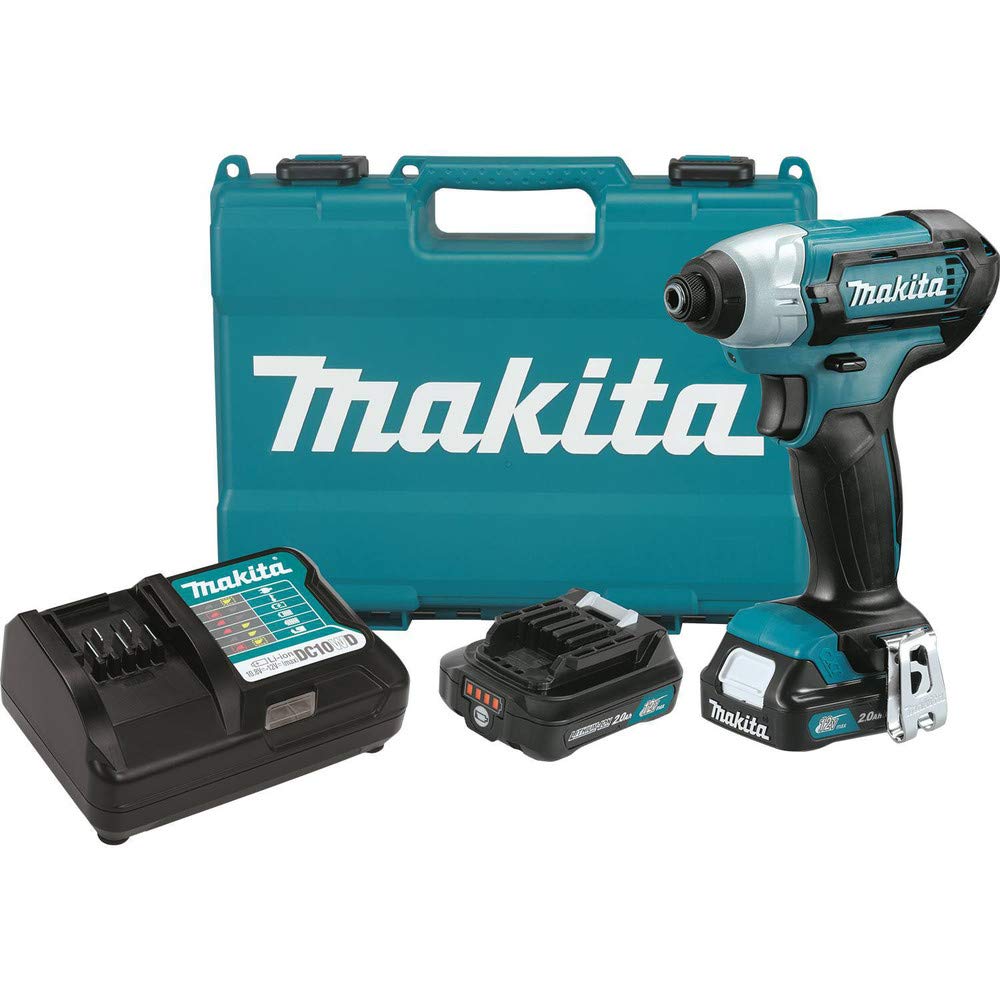 Makita DT03R1 12V max brushless driver kit A quiet everyday workhorse for apartment makers +Compact 12V subcompact design+Brushless motor efficiency -Lower power than 18V | $130.30 | Buy → | |
 Worx MakerX WX031L A pint-sized drill driver for tight workshops +Compact modular design+Brushless 20V motor -Smaller chuck capacity | $74.99 | Buy → |
Timing noisy tasks and talking to neighbors
Power tools are loud, even the "quiet" ones. A typical cordless drill hovers around 70–80 dB, a random orbital sander pushes past 85 dB, and a circular saw or miter saw can hit 95–105 dB at the source. Those numbers don't sound catastrophic on paper, but sound carries through shared walls, floors, and ceilings in ways that surprise people — drywall, joists, and HVAC ductwork transmit vibration as efficiently as a drum head. The tool itself is only half the problem; the building's structure is the amplifier. So before you worry about decibel ratings or rubber grommets, the cheapest and most effective thing you can do is choose the right moment to make noise.
Most buildings and local noise ordinances draw the line somewhere between 9 a.m. and 10 a.m. on weekdays, with a slightly later start on weekends. Apartment complexes, HOAs, and condo associations often publish their own rules, and they tend to be stricter than municipal code because the complaints come from inside the building rather than from a code enforcement officer. The generally accepted window for disruptive work in shared housing is 10 a.m. to 8 p.m. on weekdays and 11 a.m. to 6 p.m. on weekends and holidays. Anything outside that range risks a noise complaint — and in some jurisdictions, a fine. If you live in a building with shift workers, remote professionals on calls, or families with young kids napping, lean toward the middle of those windows rather than the edges.
The other timing lever is duration. A two-minute task like drilling a pilot hole and hanging a shelf is a very different social event than a four-hour refinishing project. Even within the allowed hours, sustained noise from a belt sander or table saw will wear on neighbors faster than a quick drill pass. Break big jobs into chunks and save the loudest work for a single block of time rather than dragging intermittent noise across an entire Saturday. Run the loudest cuts in the morning when people are more likely to be out, and reserve quieter tasks — measuring, dry-fitting, sanding by hand, assembling with a driver instead of a drill — for the late afternoon and evening hours.
- Knock on doors (or drop a note) a day or two before loud work begins. Give a specific window: "Saturday from 10 to noon" beats "this weekend sometime."
- Apologize in advance for the disruption and ask if there's a better time for anyone with a WFH schedule, a sleeping baby, or a medical condition. People are far more forgiving when you ask instead of apologize after the fact.
- Share a way to reach you — a phone number or a door knock — and respond quickly if someone asks you to pause. Ignoring a polite request is what turns a friendly heads-up into a lease violation.
- Clean up shared spaces (hallways, lobbies, elevators) afterward. Sawdust tracked into a hallway is a smaller grievance than noise, but it stacks. ::
The single biggest mistake people make is assuming their project is too small to mention. Hanging a curtain rod, mounting a TV, or assembling a bookcase all involve a drill, and all of them are louder than the average vacuum cleaner to the person on the other side of the wall. Heads-up is cheap, takes about five minutes, and it builds the kind of goodwill that buys you latitude for the next, bigger project. Tenants who communicate proactively rarely get complaints, even when the work itself would normally qualify.
There are a few practical extras that pay off in dense housing. If you share a ceiling with someone, put a folded towel or a moving blanket under the work area — it dampens vibration transmitted through the floor far more than you'd expect. If the wall is shared, hang the blanket or a piece of rigid foam on the wall side, but don't expect it to replace the timing conversation; soundproofing is supplementary, not a substitute for manners. For outdoor work, be aware that sound bounces off nearby buildings and can reach windows on the other side of the street, so even single-family neighbors appreciate a quick text before firing up a miter saw on a Sunday morning.
Bottom line: the cheapest soundproofing you'll ever buy is a knock on the door and a Saturday morning text. Build goodwill before you make noise, keep the loud work inside reasonable hours, and concentrate it into short blocks rather than dragging it across the day. The few minutes of social effort cost nothing and outperform every decibel-rated gasket, mat, and enclosure on the market — because they address the actual problem, which is not the sound itself but how it lands on the people who didn't sign up to hear it.## Timing noisy tasks and talking to neighbors
Power tools are loud, even the "quiet" ones. A typical cordless drill hovers around 70–80 dB, a random orbital sander pushes past 85 dB, and a circular saw or miter saw can hit 95–105 dB at the source. Those numbers don't sound catastrophic on paper, but sound carries through shared walls, floors, and ceilings in ways that surprise people — drywall, joists, and HVAC ductwork transmit vibration as efficiently as a drum head. The tool itself is only half the problem; the building's structure is the amplifier. So before you worry about decibel ratings or rubber grommets, the cheapest and most effective thing you can do is choose the right moment to make noise.
Most buildings and local noise ordinances draw the line somewhere between 9 a.m. and 10 a.m. on weekdays, with a slightly later start on weekends. Apartment complexes, HOAs, and condo associations often publish their own rules, and they tend to be stricter than municipal code because the complaints come from inside the building rather than from a code enforcement officer. The generally accepted window for disruptive work in shared housing is 10 a.m. to 8 p.m. on weekdays and 11 a.m. to 6 p.m. on weekends and holidays. Anything outside that range risks a noise complaint — and in some jurisdictions, a fine. If you live in a building with shift workers, remote professionals on calls, or families with young kids napping, lean toward the middle of those windows rather than the edges.
The other timing lever is duration. A two-minute task like drilling a pilot hole and hanging a shelf is a very different social event than a four-hour refinishing project. Even within the allowed hours, sustained noise from a belt sander or table saw will wear on neighbors faster than a quick drill pass. Break big jobs into chunks and save the loudest work for a single block of time rather than dragging intermittent noise across an entire Saturday. Run the loudest cuts in the morning when people are more likely to be out, and reserve quieter tasks — measuring, dry-fitting, sanding by hand, assembling with a driver instead of a drill — for the late afternoon and evening hours.
- Knock on doors (or drop a note) a day or two before loud work begins. Give a specific window: "Saturday from 10 to noon" beats "this weekend sometime."
- Apologize in advance for the disruption and ask if there's a better time for anyone with a WFH schedule, a sleeping baby, or a medical condition. People are far more forgiving when you ask instead of apologize after the fact.
- Share a way to reach you — a phone number or a door knock — and respond quickly if someone asks you to pause. Ignoring a polite request is what turns a friendly heads-up into a lease violation.
- Clean up shared spaces (hallways, lobbies, elevators) afterward. Sawdust tracked into a hallway is a smaller grievance than noise, but it stacks. ::
The single biggest mistake people make is assuming their project is too small to mention. Hanging a curtain rod, mounting a TV, or assembling a bookcase all involve a drill, and all of them are louder than the average vacuum cleaner to the person on the other side of the wall. Heads-up is cheap, takes about five minutes, and it builds the kind of goodwill that buys you latitude for the next, bigger project. Tenants who communicate proactively rarely get complaints, even when the work itself would normally qualify.
There are a few practical extras that pay off in dense housing. If you share a ceiling with someone, put a folded towel or a moving blanket under the work area — it dampens vibration transmitted through the floor far more than you'd expect. If the wall is shared, hang the blanket or a piece of rigid foam on the wall side, but don't expect it to replace the timing conversation; soundproofing is supplementary, not a substitute for manners. For outdoor work, be aware that sound bounces off nearby buildings and can reach windows on the other side of the street, so even single-family neighbors appreciate a quick text before firing up a miter saw on a Sunday morning.
Bottom line: the cheapest soundproofing you'll ever buy is a knock on the door and a Saturday morning text. Build goodwill before you make noise, keep the loud work inside reasonable hours, and concentrate it into short blocks rather than dragging it across the day. The few minutes of social effort cost nothing and outperform every decibel-rated gasket, mat, and enclosure on the market — because they address the actual problem, which is not the sound itself but how it lands on the people who didn't sign up to hear it.
Common pitfalls that lead to noise complaints
Even the quietest tool can turn into a neighbor-relations problem if the surrounding setup fights against you. Most noise complaints about home workshops and DIY projects aren't actually about the tool itself — they're about how noise is transmitted through the structure of the home, or about timing that ignores the people next door. The good news is that every one of these pitfalls has a cheap, simple fix once you understand why it's happening in the first place.
Hollow-core interior doors are a huge culprit. They're built from a thin MDF or hardboard skin over a cardboard honeycomb core, which is fine for keeping rooms visually separate but terrible at damping vibration. When a tool, vacuum, charger, or work light is set on top of a closed hollow-core door, the door becomes a membrane — essentially a drum head — and every rattle and hum gets amplified into the room on the other side. Sound exits at a much higher amplitude than it would from the same item sitting on a workbench or a concrete slab. The fix is to keep heavy, vibrating equipment off any interior door, especially the ones shared with adjacent units. A solid-core door, even a budget one, makes a noticeable difference; an MDF workbench or a thick rubber mat on the floor does even more, because it adds mass and decouples the source from a thin resonant surface.
Dust-extraction vacs are the second classic mistake. It's tempting to park a shop vac flush against an interior wall so the hose reach is convenient, but thin partition walls — the kind built with 2x4 studs and a single layer of drywall on each side — are essentially flexible panels. A vacuum motor pressed against that wall couples its vibration directly into the studs, and the drywall becomes a speaker cone broadcasting the hum into the next room. The same effect happens with air compressors, planers on a rolling stand, and even a larger drill left running while you reposition. Pulling the vac at least a few inches off the wall, putting it on a rubber anti-vibration mat, or hanging it on a bracket that uses rubber isolators will cut the low-frequency drone that travels the farthest and irritates people the most. Foam weatherstripping along the baseboard pays off here too — it breaks the mechanical path from the floor to the wall framing so vibration has to fight to find a route.
Impact noise is a completely different problem from steady-state hum, and it punishes you harder. A socket or hex bit dropped from bench height onto ceramic tile, porcelain, or sealed concrete produces a short, sharp transient that can easily clear 80 dB at the source — a sound that cuts through walls, music, and sleep in a way steady motor noise never does. Drop a whole tool or a magnetic tray and you're in impact-hammer territory. The fixes are unglamorous but effective: a rubber mat or a cut-to-fit piece of horse-stall matting under the work area; a magnetic parts tray instead of an open tray that gets knocked; and the simple habit of clipping bits and sockets back into a lanyard or padded pouch the moment you swap them. Tile and laminate floors also benefit from a folding rubber work platform if you do a lot of overhead work where drops are more likely.
Then there's the timing problem. Even a perfectly isolated setup will get you a complaint if it runs at the wrong hour. Most local noise ordinances classify "construction-type" noise — drills, sanders, saws, and loud shop vacs — as a nuisance after 10 pm on weekdays and earlier on weekends, and many HOAs and apartment leases have their own quieter cutoffs. The decibel limits in those rules often start around 55 dB at the property line, roughly the level of a normal conversation indoors, so even a relatively quiet tool can put you in violation after hours. The practical move is to confine loud work to daytime hours on weekends and to weekday afternoons, batch the noisy tasks into a single short session instead of dragging them out, and save assembly, layout, and finishing work for after-hours. A posted schedule on the inside of the workshop door keeps everyone in the household on the same page and makes a complaint much easier to defuse if one ever comes in.
Before you blame the tool, blame the room. Most "loud tool" problems are really transmission problems — the door, the wall, the floor, or the clock doing the loud part. Address those four variables and the same tool that once had neighbors knocking will usually become perfectly livable, which is why the buying decision matters less than the setup around it. ::## Common pitfalls that lead to noise complaints
Even the quietest tool can turn into a neighbor-relations problem if the surrounding setup fights against you. Most noise complaints about home workshops and DIY projects aren't actually about the tool itself — they're about how noise is transmitted through the structure of the home, or about timing that ignores the people next door. The good news is that every one of these pitfalls has a cheap, simple fix once you understand why it's happening in the first place.
Hollow-core interior doors are a huge culprit. They're built from a thin MDF or hardboard skin over a cardboard honeycomb core, which is fine for keeping rooms visually separate but terrible at damping vibration. When a tool, vacuum, charger, or work light is set on top of a closed hollow-core door, the door becomes a membrane — essentially a drum head — and every rattle and hum gets amplified into the room on the other side. Sound exits at a much higher amplitude than it would from the same item sitting on a workbench or a concrete slab. The fix is to keep heavy, vibrating equipment off any interior door, especially the ones shared with adjacent units. A solid-core door, even a budget one, makes a noticeable difference; an MDF workbench or a thick rubber mat on the floor does even more, because it adds mass and decouples the source from a thin resonant surface.
Dust-extraction vacs are the second classic mistake. It's tempting to park a shop vac flush against an interior wall so the hose reach is convenient, but thin partition walls — the kind built with 2x4 studs and a single layer of drywall on each side — are essentially flexible panels. A vacuum motor pressed against that wall couples its vibration directly into the studs, and the drywall becomes a speaker cone broadcasting the hum into the next room. The same effect happens with air compressors, planers on a rolling stand, and even a larger drill left running while you reposition. Pulling the vac at least a few inches off the wall, putting it on a rubber anti-vibration mat, or hanging it on a bracket that uses rubber isolators will cut the low-frequency drone that travels the farthest and irritates people the most. Foam weatherstripping along the baseboard pays off here too — it breaks the mechanical path from the floor to the wall framing so vibration has to fight to find a route.
Impact noise is a completely different problem from steady-state hum, and it punishes you harder. A socket or hex bit dropped from bench height onto ceramic tile, porcelain, or sealed concrete produces a short, sharp transient that can easily clear 80 dB at the source — a sound that cuts through walls, music, and sleep in a way steady motor noise never does. Drop a whole tool or a magnetic tray and you're in impact-hammer territory. The fixes are unglamorous but effective: a rubber mat or a cut-to-fit piece of horse-stall matting under the work area; a magnetic parts tray instead of an open tray that gets knocked; and the simple habit of clipping bits and sockets back into a lanyard or padded pouch the moment you swap them. Tile and laminate floors also benefit from a folding rubber work platform if you do a lot of overhead work where drops are more likely.
Then there's the timing problem. Even a perfectly isolated setup will get you a complaint if it runs at the wrong hour. Most local noise ordinances classify "construction-type" noise — drills, sanders, saws, and loud shop vacs — as a nuisance after 10 pm on weekdays and earlier on weekends, and many HOAs and apartment leases have their own quieter cutoffs. The decibel limits in those rules often start around 55 dB at the property line, roughly the level of a normal conversation indoors, so even a relatively quiet tool can put you in violation after hours. The practical move is to confine loud work to daytime hours on weekends and to weekday afternoons, batch the noisy tasks into a single short session instead of dragging them out, and save assembly, layout, and finishing work for after-hours. A posted schedule on the inside of the workshop door keeps everyone in the household on the same page and makes a complaint much easier to defuse if one ever comes in.
Before you blame the tool, blame the room. Most "loud tool" problems are really transmission problems — the door, the wall, the floor, or the clock doing the loud part. Address those four variables and the same tool that once had neighbors knocking will usually become perfectly livable, which is why the buying decision matters less than the setup around it. ::
The full apartment soundproofing checklist
Apartment noise problems rarely come from a single source, and a single product rarely fixes them. Footsteps from the unit above, conversation through the shared wall, hallway chatter seeping under the door, and the rattle of a bathroom exhaust fan all travel different paths at different frequencies. The most effective renter-friendly setups stack three layers of defense: seal the obvious gaps first, add mass and absorption where you can, then choose quiet appliances and masking tools that finish the job. Walking through the checklist in this order keeps spending proportional to the problem and prevents over-buying solutions that won't move the needle.
Tier 1: The free and ten-dollar fixes
Start at the perimeter of the room. Sound leaks behave like water: if there is a path, it will find it. The single biggest upgrade most renters overlook is the gap under the front door. A self-adhesive door sweep or a fabric draft stopper closes a 1 to 2 inch opening that otherwise acts as a wide funnel for hallway noise, cooking smells, and light. Pair it with weatherstripping around the door jamb and a simple cover for the peephole and mail slot if your building has one. Door seals are inexpensive, reversible, and typically install in minutes with no tools.
Next, work the windows and walls of soft surfaces. Standard single-pane glass transmits traffic and street noise readily, so a pair of well-weighted floor-to-ceiling curtains hung on a rod that overlaps the frame by a few inches on each side does far more than people expect. A thick area rug with a felt or rubber pad underneath tackles two problems at once: airborne echo inside the room and impact sound transmitted downward through a floating floor. None of these upgrades require drilling into concrete, which matters if your lease restricts modifications, and they generally pay back the cost in sleep quality within a week.
Tier 2: Mass, absorption, and decoupling
Once the gaps are sealed, focus on the wall you share with the loudest neighbor. Acoustic panels wrapped in fabric are the most visible option and the most misunderstood. By themselves, thin foam panels mainly tame echo inside your room; they do very little against sound coming through a wall. What actually blocks transmission is mass and, where possible, mechanical decoupling. Mass-loaded vinyl (MLV) is a dense, flexible barrier roughly one-eighth to one-quarter inch thick that hangs like a curtain or mounts behind furniture. At four or five pounds per square foot, it meaningfully reduces mid-range voices and television sound bleeding through drywall.
For renters who want a more permanent-looking solution, stacking function can help. A tall, fully loaded bookcase placed against the shared wall adds considerable mass, breaks up a flat reflective surface, and stores belongings. If you own the unit or have permission to make modest alterations, adding a second layer of drywall with a damping compound in between is the textbook approach for shared walls. Resilient channel, which decouples the drywall from the studs, is the upgrade that actually delivers the rated STC numbers printed on the box. The trade-off is thickness: each layer costs you living space, and resilient channel requires careful installation to avoid short-circuits that defeat the decoupling. Apartment dwellers should weigh whether the project warrants landlord approval before committing.
Tier 3: Quiet tools and masking
The third layer addresses the noise you generate, and the noise you can't fully eliminate. In the kitchen, a range hood rated under about 1.5 sones is barely perceptible at conversational distance, while budget hoods often run closer to 4 to 6 sones and dominate the soundscape during cooking. Bathroom and ceiling fans follow the same logic — look for models with a sones rating in the low single digits if the unit's current fan is a torture test during late-night showers. Washers and dishwashers, if provided by the building, are usually fixed, but countertop appliances such as blenders and vacuums can be chosen for measured decibel output. The difference between a 70 dB and an 85 dB blender is enormous on the ear, even though the gap sounds modest on paper.
Masking completes the system. A real white noise machine or a quality fan running at low speed raises the room's background floor just enough to cover irregular disturbances like a slamming door or a neighbor's alarm. Apps work in a pinch but tie up your phone and add latency, so a dedicated unit with a physical control is more practical for daily use. Earplugs rated for sleep — typically with an NRR in the high 20s to mid 30s — are the cheapest insurance policy for light sleepers, and foam or silicone pairs cost almost nothing to rotate. None of these tools "soundproof" anything, but combined with sealed doors and a few mass-adding pieces of furniture, they routinely deliver the kind of nighttime quiet most renters assume requires a contractor.
Quick-reference checklist
| Layer | Action | Typical effort | Best for |
|---|---|---|---|
| Gaps | Door sweep, weatherstripping, peephole/mail slot cover | 10–30 minutes | Hallway and neighbor-entry noise |
| Soft surfaces | Weighted curtains, rug with pad, upholstered headboard | 1–2 hours | Echo, street noise, light impact |
| Mass | Bookcase against shared wall, MLV hung as a barrier | 1–3 hours | Voices and TV bleed through drywall |
| Decoupling | Resilient channel + second drywall with damping compound | Weekend project | Serious airborne noise (owner/approved installs only) |
| Quiet tools | Low-sone fans, quieter appliances, white noise machine | As needed | Self-generated noise, masking what's left |
| Backup | High-NRR foam or silicone sleep earplugs | None | Light sleepers, unpredictable disturbances |
Work through the table top to bottom on a single weekend, and stop when your sleep and conversations are no longer interrupted. Anything beyond that point is refinement, not necessity.
Apartment workshop soundproofing: quick answers
Apartment workshop soundproofing is part science, part etiquette, and part buying the right gear in the right order. The questions below come up again and again from hobbyists setting up a shop in a shared building, and the answers draw on building-acoustics guidance, manufacturer specs, and the kind of neighborly wisdom that only comes from living in close quarters. None of this is about getting studio-grade silence — it's about keeping your projects and your relationships intact.
Frequently asked questions
How much does acoustic foam actually help in an apartment workshop?
Acoustic foam is widely misunderstood. Its real job is controlling echo inside the room — the slap-back you hear when you clap your hands in an empty space — not blocking sound from leaving. Foam panels soften reflections so your work sounds cleaner to you, but for neighbors, mid- and high-frequency leakage is barely changed by a few inches of foam on the wall. Independent acoustic consultants consistently place absorption panels second or third in priority behind sealing gaps and adding mass.
Where foam does pay off in a workshop setting is at the source: lining the inside of a router table's dust cabinet, building a foam-lined baffle around a small compressor, or sticking wedges to the back of a tool cabinet door that rattles. In those spots foam quiets rattles and tames the metallic ring that travels through walls. For whole-room treatment, expect a noticeable change in how the room feels acoustically but a small change in what your downstairs neighbor hears.
If you want a real measurement of foam's impact, focus on the noise reduction coefficient (NRC) rating rather than the foam's thickness or color. A 2-inch panel with an NRC of 0.85 will outperform a 4-inch panel with an NRC of 0.45 even though it looks skinnier. Avoid "egg crate" mattress foam sold as acoustic foam — it lacks the density to absorb anything below about 1 kHz, which is the range where most power-tool noise lives. ::
Frequently asked questions
Will a thick rug really cut noise for downstairs neighbors?
A dense rug with a quality pad underneath is one of the highest-value moves you can make, especially if your work involves dropping things, rolling tool chests, or operating anything with impact. Hard surfaces transmit structure-borne noise efficiently because the floor itself acts as a sounding board, and a thick wool or felt-backed rug decouples impact energy from the substrate. Tenants routinely report that a single 8x10 rug plus a 3/8-inch rubber or felt pad noticeably reduces the thump of a dropped hardwood offcut or a kettlebell-style toolbox set down too hard.
The trick is the pad. A cheap rug on a thin foam pad gives you a comfort upgrade but almost no acoustic benefit. Look for rug pads advertised as "soundproofing" or "acoustic" with a high mass per square foot — felt, recycled rubber, or dense memory-foam composites in the 6–10 lb/ft³ range. Pair the rug with rubber feet under any rolling stool or chair so you don't roll over the rug and crush its acoustic performance.
For upstairs neighbors, rugs help less because airborne sound from tools isn't coming up through the floor — it's traveling through walls, ceiling cavities, and shared ductwork. In that case, the rug is a courtesy add-on, not a soundproofing strategy. Seal electrical outlets and ceiling fixtures, hang heavy curtains, and bookend the room with tall bookcases loaded with books before you spend serious money on a rug. ::
Frequently asked questions
What hours are safest for noisy workshop work in an apartment?
Most lease agreements, municipal noise ordinances, and house rules converge on a similar quiet-hours window: 10 p.m. to 7 or 8 a.m. on weeknights, and 10 p.m. to 9 or 10 a.m. on weekends. Reading your specific lease first is worth the ten minutes — some buildings add stricter "construction" rules that ban power tools entirely during weekday daytime hours, and HOAs can be even tighter. Newer "quiet enjoyment" clauses in many leases now also cover sustained mid-level noise, not just outright banging.
Within the legal window, treat the edges as a courtesy zone. Start any loud work at 9 a.m. rather than 8 a.m. — many neighbors with young kids or shift workers use the early hours for sleep. Likewise, end by 8 p.m. even if your city's cutoff is 10 p.m. The "shoulder" hours are where most noise complaints start, and they're almost always avoidable.
A simple text thread or building-app note the day before goes a long way. Something like, "Heads up: I'll be running the miter saw in short bursts tomorrow between 11 and 3 — nothing past dinner. Let me know if any time inside that window is bad for you." This converts a potential complaint into a collaboration, and neighbors almost always respond with "no problem" or a single specific request you can plan around. ::
Frequently asked questions
How do I talk to neighbors about workshop noise without it being awkward?
Frame the conversation as a heads-up, not an apology. People bristle when they feel like a confession is coming, but they relax when they feel like an adult is giving them useful information. Lead with what you're doing, when, and for how long — and offer a channel for feedback. Most neighbors won't actually take you up on it, but the offer itself is what disarms the situation.
If a complaint does come in later, resist the urge to defend your right to make noise. Instead, ask what they actually heard and when. Often the answer is one specific event — a dropped board at 11 p.m., a compressor cycling on at 6 a.m. — that you can address with a single fix like relocating the compressor onto a rubber mat or shifting a project by an hour. Solving the concrete problem is faster and friendlier than arguing about rights.
Keep receipts of your goodwill. A text thread showing you gave notice, a photo of the rubber feet you added under your bench, a quick follow-up after the work is done — these become valuable if a property manager ever gets involved. Most disputes escalate because no one can point to a record, not because anyone is being unreasonable. A few friendly texts over the life of a project turn "noisy neighbor" into "the guy who keeps us in the loop." ::
Frequently asked questions
Which tools are worth upgrading first to reduce noise in an apartment?
The biggest acoustic wins per dollar come from swapping the loudest air-moving tools first, not from buying quieter versions of mid-volume tools. A screaming vacuum, leaf blower, or shop vacuum typically sits in the 80–95 dB range, while a hand plane or cordless drill rarely breaks 75 dB. If you run a dust collector or shop vac for hours at a time, that constant drone is more irritating to neighbors than the occasional burst of a miter saw — and easier to fix with a quieter replacement.
Second priority is the compressor. Direct-drive piston compressors are notoriously loud on startup, and even "quiet" models in the 60 dB range are a huge upgrade over a screaming pancake compressor. Look for oil-lubricated, belt-drive units in 30–60 gallon sizes, or step up to a scroll compressor if your budget allows. Mounting any compressor on a thick rubber isolation pad drops another 3–5 dB of structure-borne noise into the floor.
Third, address your saws and sanders. Replacing a brush motor with a brushless one in a miter saw or circular saw can shave 5–10 dB and dramatically change the pitch of the noise — neighbors respond better to a lower hum than to a high whine. Random-orbit sanders are much quieter than belt sanders for the same material removal, and the upgrade often pays for itself in surface quality too. Hold off on swapping hand tools, clamps, or workbenches — those don't generate enough noise to register on a neighbor's complaint list, and the money is better spent on sealing gaps and adding mass where it counts.